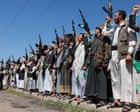
Maeen Abdulmalik Saeed, Yemen's former prime minister and current presidential adviser, warned that control of the southwestern city of Taiz represents a decisive battleground for western security interests. He said the Houthis, an Iran-backed militia, launched a military campaign last month to seize Yemen's Red Sea coast after four years of relative calm following a 2022 UN-brokered ceasefire.
Saeed framed Taiz's strategic importance around the Bab al-Mandab strait, a major shipping channel in the Red Sea. If the Houthis capture Taiz, he argued, they would control access to this waterway and the road to Aden, seat of the UN-recognised Yemeni government. Saeed claimed the Houthis intend to seize all of Yemen to "help Iran to expand the chaos."
The city, which houses over 500,000 people, faces an encirclement from four directions after government forces lost control of the western coast. Saeed said Houthi forces are currently allowing fuel and commodities into urban areas while expanding control of rural zones and smaller cities. He predicted a full siege within days and warned the situation would exceed the severity of Taiz's 2015 siege.
Saeed, who served as prime minister from 2018 to 2024 and previously negotiated with the Houthis, acknowledged significant weaknesses in the government's response. He cited poor coordination among government-backed troops, including the National Shield Forces, National Resistance Forces and Giants Brigades. He also stated Saudi Arabia, Yemen's chief backer, had not anticipated the escalation and that his side possessed only light weapons against Houthi forces.
On Houthi military evolution, Saeed traced their capability growth over a decade. In 2017, he said, Houthis operated only imprecise missiles. By December 2020, they launched a ballistic missile attack on Aden airport that killed 28 people and wounded 107, including Saeed himself. That missile travelled 186 miles from its origin, demonstrating technological advances Saeed attributed to Iranian training in Sana'a, the Houthi capital.
Saeed connected the September Houthi offensive to broader Iranian strategy, noting it coincided with international pressure on Iran. He claimed the Houthis have targeted Saudi oil installations and airports as retaliation for what they describe as a Saudi blockade, framing these actions as part of Iranian efforts to "keep expanding the consequences of the war."